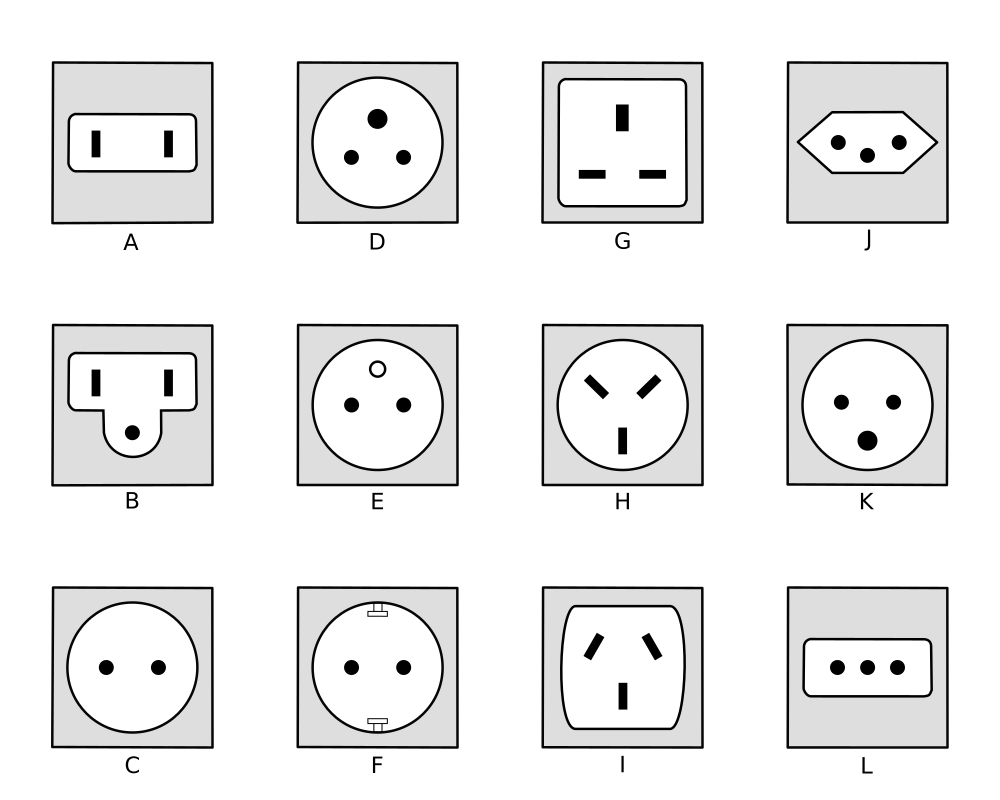
Power plug & socket guide for SE Asia
Pick where you're coming from and where you're going. The verdict tells you whether to pack an adapter, a voltage converter, both or neither.
How to interpret
- Just plug in
- Your plugs fit the wall sockets and the voltage is close enough (within the ±10% tolerance most modern electronics accept). No adapter, no converter.
- Adapter only
- The shape of your plug doesn't fit the destination socket, but the voltage and frequency are compatible. A €2 to €10 adapter is enough. Sold at any electronics shop or airport kiosk.
- Voltage converter
- The voltage is different enough to damage single-voltage devices (typically US/Canada/Japan kit at 100 to 127V plugged into SE Asia's 220 to 240V mains). Dual-voltage devices are marked "INPUT: 100-240V" on the brick and are fine with just an adapter. Hair dryers and old shavers are the usual victims.
- Frequency note
- Most of SE Asia runs at 50Hz; the Philippines and a few origin countries run at 60Hz. Chargers and laptops don't care. Anything with a precise motor or analogue clock (a few hair dryers, older audio gear) can drift.
Plug shapes follow the IEC World Plugs letter codes (A through O). Voltage and frequency data cross-checked against the IEC and country electricity authorities.